

| 2026 Incidents | |
| Jan | 29 |
| Feb | 32 |
| Mar | 28 |
| Apr | 26 |
| May | 26 |
| Jun | 34 |
| Jul | 31 |
| Aug | 47 |
| Sep | 0 |
| Oct | 0 |
| Nov | 0 |
| Dec | 0 |
| Total | 253 |
Our Commitment to Fire Prevention
Fire prevention is one of the most critical services we provide to our community. The Sheridan Park Volunteer Fire Company is dedicated to helping residents, families, and local businesses reduce the risk of fire, injury, and property damage through proactive education, awareness, and safe practices.
Safety is a Shared Responsibility
While a fire can happen anywhere, the majority are entirely preventable. By incorporating simple safety habits into your daily routine—whether at home, work, or school—you play a vital role in protecting your loved ones and neighbors. We encourage everyone in our community to make fire prevention a part of everyday life. Please explore the fire prevention safety tips provided below to help protect your home and family.
Get in Touch
For more fire prevention resources, community safety programs, or general inquiries, please contact the Sheridan Park Volunteer Fire Company by clicking the button below and completing the form or sending your inquiry to fireprevention@sheridanparkfire.com. Together, we can keep our community safe.

Smoke Alarms Save Lives
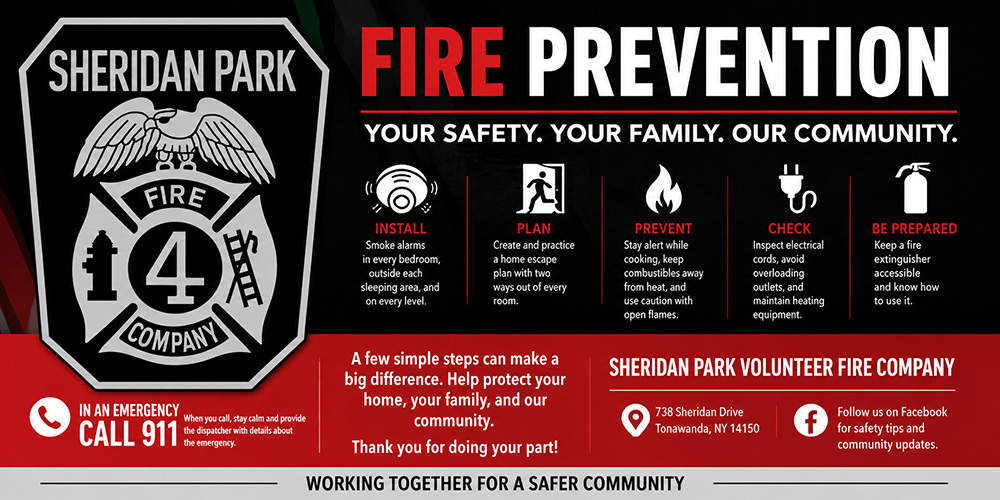
Working smoke alarms provide early warning during a fire and give you valuable time to escape.
Smoke Alarm Safety Tips
Install smoke alarms:
- Inside every bedroom
- Outside each sleeping area
- On every level of the home, including the basement
Test smoke alarms at least once a month. Replace batteries as needed, and replace the entire smoke alarm according to the manufacturer’s instructions. If a smoke alarm sounds, leave the building immediately and call 911 from a safe location.
Create and Practice a Home Escape Plan
Every household should have a fire escape plan. Make sure everyone in your home knows what to do if there is a fire.
Your escape plan should include:
- Two ways out of every room, when possible
- A designated meeting place outside
- A plan to assist children, older adults, or anyone with limited mobility
- Practice drills at least twice a year
Once you are outside, stay outside. Never go back into a burning building.
Cooking Safety
Cooking fires are one of the leading causes of home fires. Stay alert whenever you are cooking.
Cooking Safety Tips
Stay in the kitchen when frying, grilling, or broiling food. Keep anything that can burn, such as towels, paper products, curtains, and packaging, away from the stove. Turn pot handles inward to prevent spills, and keep children and pets away from cooking areas.
If a small grease fire starts, turn off the burner and carefully cover the pan with a lid. Never use water on a grease fire. If the fire grows or you are unsure what to do, leave immediately and call 911.
Heating Safety
Heating equipment can create a serious fire risk when not used properly.
Heating Safety Tips
Keep anything that can burn at least three feet away from heating equipment, including space heaters, fireplaces, wood stoves, and furnaces. Plug space heaters directly into wall outlets and turn them off when leaving the room or going to sleep.
Have chimneys, fireplaces, furnaces, and heating systems inspected and maintained regularly by a qualified professional.
Electrical Safety
Electrical problems can cause fires without warning.
Electrical Safety Tips
Do not overload outlets or extension cords. Replace damaged cords immediately. Avoid running cords under rugs or furniture, and use extension cords only for temporary use. If you notice flickering lights, frequent breaker trips, sparks, or a burning smell, contact a qualified electrician.
Candle and Open Flame Safety
Candles and open flames should always be used with care.
Keep candles at least one foot away from anything that can burn. Use sturdy candle holders and place them on stable surfaces. Never leave candles unattended, and always extinguish them before leaving a room or going to sleep. Consider using battery-operated candles as a safer alternative.
Outdoor Fire Safety
Outdoor fires, grills, fire pits, and recreational burning must be handled responsibly.
Keep grills and fire pits away from buildings, decks, fences, trees, and other combustible materials. Never leave an outdoor fire unattended, and keep water or a fire extinguisher nearby. Make sure fires are fully extinguished before leaving the area.
Residents should follow all local laws and regulations regarding open burning, recreational fires, and seasonal restrictions.
Carbon Monoxide Safety
Carbon monoxide, often called CO, is a colorless and odorless gas that can be deadly.
Install carbon monoxide alarms on every level of your home and near sleeping areas. Have fuel-burning appliances, heating systems, fireplaces, and chimneys inspected regularly. Never use generators, grills, or fuel-burning equipment inside a home, garage, or enclosed space.
If a carbon monoxide alarm sounds, move outside to fresh air immediately and call 911.
Fire Extinguishers
A fire extinguisher can be helpful for small fires, but only when used safely.
Only attempt to use a fire extinguisher if the fire is small, you have a clear escape route, and someone has called 911. If the fire spreads, produces heavy smoke, or you feel unsafe, leave immediately and wait for firefighters to arrive.
Safety for Families and Children
Talk with children about fire safety in a calm and age-appropriate way. Teach them that matches, lighters, candles, and stoves are tools for adults, not toys. Make sure children know how to recognize a smoke alarm, how to get outside, and where to meet after escaping.
Families should also teach children how and when to call 911 in an emergency.
Business and Workplace Fire Safety
Businesses should maintain clear exits, working fire protection systems, and safe storage practices. Employees should know emergency procedures, evacuation routes, and designated meeting areas.
Keep exit doors, hallways, fire extinguishers, sprinkler systems, and electrical panels clear and accessible at all times.
In an Emergency
If you see smoke, fire, or any other emergency, call 911 immediately.
When calling 911, provide the dispatcher with the location of the emergency, what you see, and whether anyone may be in danger. Follow the dispatcher’s instructions and stay on the line until told to hang up.
